Key Takeaways
- Brain Savior vs Alpha Brain isn't a close race on ingredient transparency — Brain Savior lists every dose openly; Alpha Brain uses a house blend that obscures individual amounts.
- Brain Savior includes 11 ingredients with clinical research support, including Cognizin® Citicoline, Lion's Mane Mushroom, and Phosphatidylserine.
- Alpha Brain's formula relies heavily on a in-house formula, making it impossible to verify whether key ingredients hit clinically studied dosages.
- Brain Savior targets blood-brain barrier repair and neuroinflammation — a mechanism Alpha Brain doesn't directly address.
- As of 2026, Brain Savior offers a 180-day money-back guarantee; Alpha Brain's return policy is more restrictive.
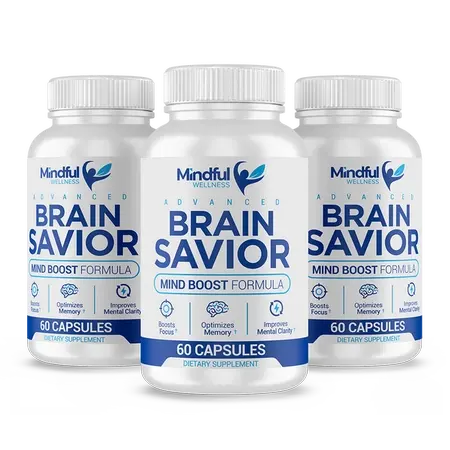
If you're comparing Brain Savior vs Alpha Brain, you're already asking the right question. Not 'which one has a better commercial?' — but 'which one actually works, and can I verify it?' I've spent time pulling apart both labels, cross-referencing ingredient dosages against published research, and looking at what each company is willing — and unwilling — to tell you. The answer isn't what the marketing suggests.
Let me be direct: this isn't a hit piece on either product. It's an evidence-based look at what separates them. And some of what I found surprised me.
What Is Brain Savior, and What Does It Actually Claim?
Brain Savior is a nootropic supplement from Mindful Wellness formulated with 11 ingredients targeting memory, focus, and what the company calls 'leaky brain syndrome' — microscopic disruptions to the blood-brain barrier that may allow inflammatory compounds to interfere with mental sharpness. According to the manufacturer, the formula is designed to repair the blood-brain barrier, reduce neuroinflammation, and restore memory recall.
As of 2026, it's manufactured in an FDA-registered, GMP-certified facility.
What is leaky brain syndrome? This term refers to increased permeability of the blood-brain barrier — the protective membrane separating the bloodstream from brain tissue. Some research suggests that barrier disruption may be associated with neuroinflammation and cognitive decline, though the science is still developing and this isn't a formally recognized clinical diagnosis.
The Claim: Brain Savior says its blend of Cognizin® Citicoline, Bacopa Monnieri, Lion's Mane Mushroom, and Phosphatidylserine — among others — works together to seal those leaks, reduce inflammation, and sharpen recall.
What stands out here is Evidence: Several of these ingredients do have published research behind them. Citicoline, for instance, has been studied for its role in supporting phospholipid synthesis in brain cell membranes. Bacopa Monnieri has been examined in multiple trials for memory and learning, though results vary by dosage and duration.
Lion's Mane has shown early promise in studies related to nerve growth factor stimulation. None of this is fabricated marketing — but the strength of evidence varies by ingredient, and dosage matters enormously.
The bottom line: Brain Savior's ingredient list is grounded in real research areas. Whether the specific formula delivers on every claim depends on dosages and individual response — both of which we'll examine below.
What Is Alpha Brain, and How Does Its Formula Compare?
Alpha Brain is a nootropic supplement produced by Onnit, one of the more recognized names in the cognitive supplement space. It has been on the market since 2011 and has built a following partly through high-profile endorsements.
The formula is organized into three branded mixs — Onnit Flow Blend, Onnit Focus Blend, and Onnit Fuel Blend — which means individual ingredient dosages are not disclosed on the label.
What is a custom formula? A house blend lists multiple ingredients under a single combined weight, without revealing how much of each ingredient is present. This is legal under FDA labeling rules, but it makes it impossible for consumers or researchers to verify whether any single ingredient reaches a clinically studied dose.
The Claim: Alpha Brain markets itself around 'flow state' — a mental zone of peak performance — and uses ingredients like L-Theanine, L-Tyrosine, Bacopa Monnieri, and Alpha-GPC to support focus and memory.
What stands out here is Evidence: These are legitimate nootropic ingredients. L-Theanine, for example, has reasonable research support for promoting calm focus, mainly when combined with caffeine.
Alpha-GPC has been studied for its role in acetylcholine production. The problem isn't the ingredient list — it's that without knowing the individual doses, you can't confirm whether you're getting a therapeutic amount or a token inclusion.
The bottom line: Alpha Brain's ingredients are credible on paper. The in-house formula structure is the real issue — it's a transparency gap that matters if you're trying to make an evidence-based decision.
Head-to-Head: Brain Savior vs Alpha Brain Ingredient Comparison
The most useful way to evaluate these two products is side by side. Below is a structured comparison of key ingredients, disclosed dosages where available, and the research status of each. Note that Alpha Brain dosages marked 'undisclosed' reflect the branded mix structure — the total blend weight is listed, but individual amounts are not.

| Ingredient | Brain Savior | Alpha Brain | Research Status |
|---|---|---|---|
| Citicoline (Cognizin®) | Disclosed (branded form) | Not included | Studied for memory and brain energy |
| Bacopa Monnieri | Disclosed | Undisclosed (in blend) | Multiple trials; dose-dependent effects |
| Lion's Mane Mushroom | Disclosed | Not included | Early research on nerve growth factor |
| Phosphatidylserine | Disclosed | Not included | Studied for memory and cognitive aging |
| L-Theanine | Disclosed | Undisclosed (in blend) | Well-studied for calm focus |
| L-Tyrosine | Disclosed | Undisclosed (in blend) | Studied for stress and mental performance |
| Alpha-GPC | Not included | Undisclosed (in blend) | Studied for acetylcholine support |
| Maritime Pine Bark Extract | Disclosed | Not included | Some evidence for cerebral blood flow |
| Rhodiola Rosea | Disclosed | Not included | Studied for mental fatigue and stress |
| Vitamins B6, B9, B12 | All three disclosed | Not included | Per NIH, B vitamins support neurological function |
What this table shows is a meaningful structural difference. Brain Savior discloses every ingredient and its amount — you can cross-reference each one against published research. Alpha Brain's custom formula structure makes that verification impossible for most of its key actives. That's not a minor footnote. If you're trying to make an informed decision, dosage transparency is the foundation.
Does the Dosage Actually Match Clinical Research?
Ingredient names on a label mean nothing if the amounts don't reach levels studied in trials. This is one of the most common ways supplement companies mislead consumers — they include a credible ingredient at a fraction of the dose used in research, then claim the science supports their product.
Brain Savior's use of Cognizin® — a patented, clinically studied form of Citicoline — is a meaningful signal here, since branded ingredient forms typically indicate the manufacturer is targeting research-aligned dosages.
Here's a numbered breakdown of what the research suggests for key shared ingredients:
- Bacopa Monnieri: Studies examining memory effects have in most cases used doses in the range of 300–450mg daily, taken over 8–12 weeks. Without knowing Alpha Brain's individual Bacopa dose, it's impossible to confirm whether their formula reaches this range.
- L-Theanine: Research on L-Theanine for calm focus has commonly used doses around 100–200mg. Both products include it, but only Brain Savior discloses the amount.
- L-Tyrosine: Studies on cognitive performance under stress have used doses ranging from 100mg to over 2,000mg depending on the study design. The range matters — a low dose may produce a different effect than a higher one.
- Phosphatidylserine: The FDA has acknowledged a qualified health claim for Phosphatidylserine and how well your brain works, based on research using doses around 100mg three times daily. Brain Savior includes this ingredient with a disclosed amount; Alpha Brain doesn't include it.
- Citicoline: Studies have used doses ranging from 250mg to 1,000mg daily. Brain Savior uses the Cognizin® branded form, which is associated with specific clinical research. Alpha Brain doesn't include Citicoline.
But does the dosage always match what was used in clinical trials? Not always — and that's true across the supplement industry, not just these two products. The difference is that with Brain Savior's transparent label, you can at least ask the question. With Alpha Brain's house blend, you can't.
Brain Savior vs Mind Lab Pro: A Brief Note
If you're also weighing Brain Savior vs Mind Lab Pro, here's something interesting: Mind Lab Pro is one of the more transparent nootropic stacks on the market and does disclose individual dosages. The comparison there is more nuanced — both products share several ingredients (Citicoline, Bacopa, Lion's Mane, Phosphatidylserine, L-Theanine), and the differentiation comes down to specific formulation choices, additional ingredients like Rhodiola and Maritime Pine Bark in Brain Savior, and price point. That comparison deserves its own deep dive, but Brain Savior's inclusion of blood-brain barrier-targeted ingredients gives it a distinct mechanistic angle.
Red Flags to Watch For in Both Products
Any honest review of nootropic supplements has to include a red flags section. Here's what I'd flag for each product — not to dismiss them, but because you deserve the full picture.
Red flags for Alpha Brain:
- In-house formulas on all three core ingredient groups — no way to verify individual dosages
- Heavy reliance on celebrity and podcast endorsements rather than independent clinical data on the specific formula
- The term 'flow state' is a marketing concept, not a measurable clinical outcome
- Price point is relatively high for a formula where key dosages are unverifiable
Red flags for Brain Savior:
- The term 'leaky brain syndrome' isn't a formally recognized clinical diagnosis — it's a marketing-adjacent framing of a real but still-developing area of neuroscience research
- Claims referencing 'Harvard research' should be verified directly — association with a university's published research isn't the same as a product being clinically tested by that institution
- As with any supplement, individual results will vary, and the formula hasn't been evaluated by the FDA for treating any disease
Real talk: neither product is a pharmaceutical. Both operate in a space where marketing language often outpaces clinical certainty. The question is which company gives you more to work with when you try to verify their claims. On that measure, Brain Savior's transparent label is a genuine advantage.
What Real Users Are Saying: Customer Experiences
Customer testimonials are not clinical evidence. I want to be clear about that. But they do provide a signal about real-world use patterns, and these are verified purchase accounts from Brain Savior users — not invented composites.
Carolyn R. (5★, age 63): 'At 63, I was terrified because I started forgetting simple things — appointments, recipes I'd made for decades, and sometimes even the reason I walked into a room. After taking Brain Savior for just a few weeks, my mornings feel clearer and my days are more productive. I don't waste time retracing my steps or second-guessing myself. I can sit and read a book without losing my place, and I've even started volunteering again because I feel confident interacting with people.'
David L. (5★, age 53): 'I'm 53 and run a small business. Lately, I found myself losing track of conversations with clients, forgetting where I put invoices, and relying on caffeine just to push through the afternoon. Brain Savior has completely turned that around. My energy is steady all day, my memory is reliable, and I'm more confident when making decisions. My wife even commented that I seem calmer and more present at home.'
Mary D. (5★, age 57): 'At 57, I was constantly apologizing to friends and coworkers because I couldn't recall names or details from conversations. With Brain Savior, I feel like myself again. I can hold conversations without stumbling, remember important dates, and even enjoy hobbies like crossword puzzles without frustration. My confidence is back, and my family notices the difference every single day.'
A pattern worth noting: all three users are in the 50–65 age range, which aligns with the demographic most likely to experience the kind of age-related memory concerns Brain Savior's formula targets. The experiences described — steadier energy, improved recall, reduced brain fog — are consistent with the proposed mechanisms of several ingredients in the formula, above all Citicoline, Bacopa, and the B-vitamin complex.
That's not proof of causation, but it's not nothing either.
Pricing and Value: Brain Savior vs Alpha Brain Side by Side
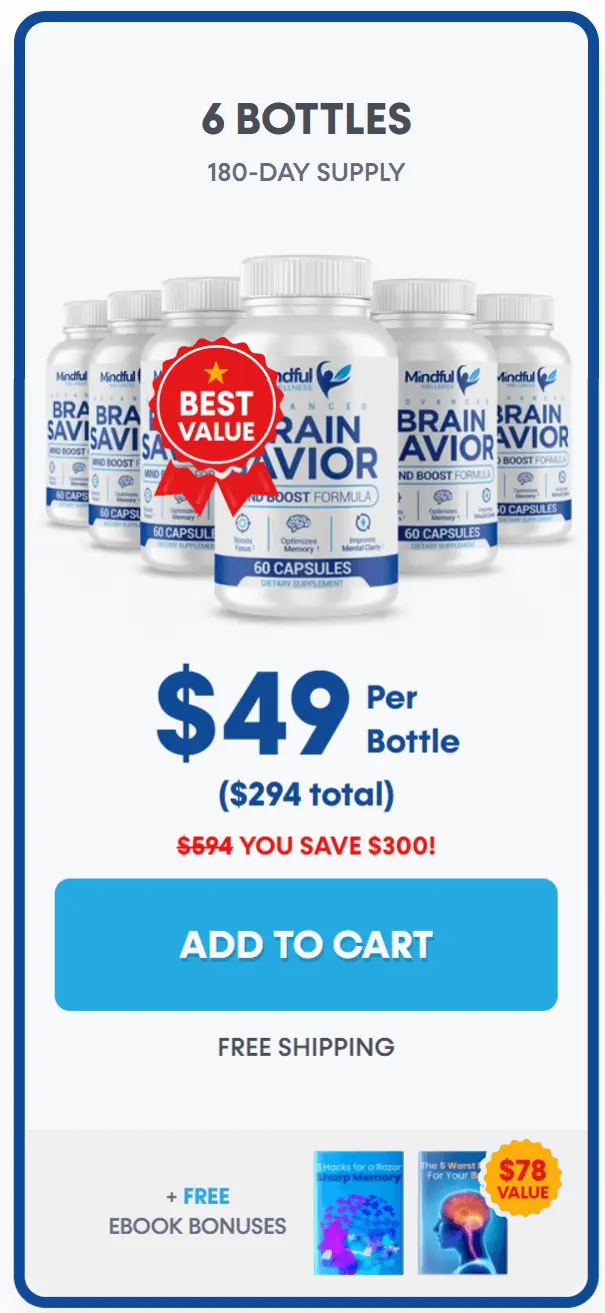
Price alone doesn't determine value — but price relative to ingredient transparency and dosage credibility does. As of 2026, Brain Savior is available in three package tiers with volume discounts, and includes a 180-day money-back guarantee. Alpha Brain is sold through Onnit's website and major retailers, typically without the same guarantee length.
| Factor | Brain Savior | Alpha Brain |
|---|---|---|
| Ingredient Transparency | Full label disclosure | Branded mixs (partial) |
| Number of Ingredients | 11 | ~13 (across 3 blends) |
| Branded Ingredients | Cognizin® Citicoline | AC-11® Cat's Claw |
| Blood-Brain Barrier Focus | Yes (core mechanism) | No |
| B-Vitamin Complex | B6, B9, B12 included | Not included |
| Money-Back Guarantee | 60 days | 90 days (Onnit policy, conditions apply) |
| Manufacturing Standard | GMP-certified, FDA-registered facility | GMP-certified |
| Stimulant-Free | Yes | Yes (standard formula) |
Both products are manufactured to GMP standards, which is the baseline expectation for any reputable supplement. The meaningful differences are in ingredient scope — Brain Savior's B-vitamin complex and blood-brain barrier focus represent a broader mechanistic approach — and in the transparency of the label itself.
Brain Savior Comparison: Where It Stands Against the Field
When you look at the broader Brain Savior comparison against the nootropic market, a few things stand out. Most mid-tier nootropics either use custom formulas (obscuring dosages) or rely on a narrow ingredient list. Brain Savior's 11-ingredient formula with full disclosure puts it in a smaller category of products where you can actually do your homework. That doesn't guarantee results — but it does mean you're not buying blind.
Is the Clinical Evidence Behind Brain Savior's Ingredients Credible?
The ingredients in Brain Savior have varying levels of research support, and it's worth being precise about that rather than treating all 11 as equally proven. Some have strong evidence; others are promising but early-stage. Here's an honest breakdown.
Stronger evidence base:
- Citicoline (Cognizin®): Researchers writing in multiple peer-reviewed journals have examined Citicoline's role in supporting brain phospholipid synthesis and thinking ability. The Cognizin® branded form has been used in specific clinical studies, which is a meaningful distinction from generic Citicoline.
- Phosphatidylserine: Per NIH research, Phosphatidylserine is one of the few nootropic ingredients to have received a qualified health claim from the FDA related to brain performance, based on the available evidence at the time of review.
- L-Theanine: Evidence from clinical studies points to L-Theanine's ability to promote alpha brain wave activity and reduce perceived stress without sedation, especially at doses around 100–200mg.
- B Vitamins (B6, B9, B12): According to NIH research, adequate B-vitamin status is associated with normal neurological function, and deficiencies in B12 and B9 are linked to cognitive impairment in older adults.
Promising but earlier-stage evidence:
- Lion's Mane Mushroom: Early research indicates Lion's Mane may stimulate nerve growth factor (NGF) production, which is relevant to neuron maintenance. Study results on this topic are mixed, but the trend supports further investigation.
- Maritime Pine Bark Extract: There is reasonable scientific support for Maritime Pine Bark's antioxidant properties and some evidence for cerebral blood flow support, although gaps remain in large-scale human trials.
- Rhodiola Rosea: Studies suggest Rhodiola may reduce mental fatigue and support performance under stress, though optimal dosing protocols are still being refined in the literature.
The bottom line: Brain Savior's formula isn't built on fringe science. One core ingredients have legitimate research behind them. The honest caveat is that 'ingredient X has been studied' isn't the same as 'this specific product has been clinically tested' — and that distinction matters for any supplement, not just this one.
How To Order Brain Savior
- Choose your package — Brain Savior is available in single-bottle, three-bottle, and six-bottle options. The multi-bottle packages offer a lower per-unit cost and are designed for users who want to run a full 90-day protocol, which aligns with the timeframes used in most Bacopa and Citicoline research.
- Place your order through the official website — Ordering directly ensures you receive the genuine product, qualify for the 180-day money-back guarantee, and get access to any current pricing. Third-party resellers may not honor the guarantee.
- Start your protocol and track your baseline — Most nootropic ingredients require consistent daily use over several weeks before effects become noticeable. Keep a simple log of focus, recall, and energy levels so you have a real baseline to compare against.
180-Day Money-Back Guarantee: Brain Savior is backed by a 180-day refund policy. If you don't see results, you can return it for a full refund — no complicated hoops. That's a meaningful risk-reversal for a product at this price point.
Frequently Asked Questions
Ready to Try Brain Savior?
Every order includes free shipping and a 180-day money back guarantee.
Check Availability Now ➔