Key Takeaways
- Lion's Mane Mushroom contains compounds called hericenones and erinacines that may support nerve growth factor (NGF) production in the brain.
- Clinical research suggests Lion's Mane may support memory and how well your brain works, especially in older adults — though most human trials to date have been small.
- Bacopa Monnieri, another ingredient in Brain Savior, has a longer clinical track record for memory support, with multiple randomized controlled trials behind it.
- Brain Savior combines Lion's Mane with 10 other studied ingredients, including Citicoline (Cognizin®) and Phosphatidylserine, targeting multiple cognitive pathways at once.
- As of 2026, the evidence base for Lion's Mane is promising but still developing — this page breaks down exactly what the data shows and where the gaps are.
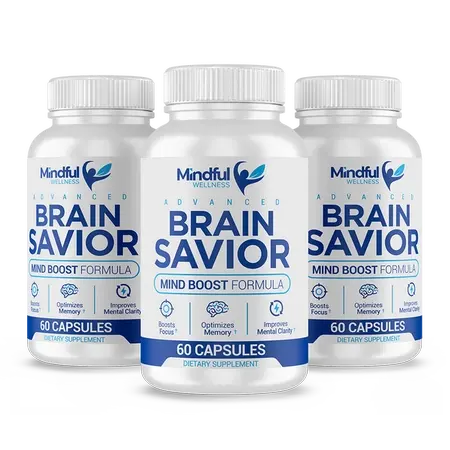
Let me be direct with you: I've reviewed a lot of supplement ingredients over the years, and Lion's Mane Mushroom is one of the few that actually makes me pay attention. Not because of the marketing — the marketing is often overblown — but because the underlying biology is genuinely interesting. The question worth asking isn't whether Lion's Mane sounds impressive. It's whether the clinical evidence holds up when you look at it closely.
This page is an evidence-based investigation into Lion's Mane Mushroom benefits, to be exact in the context of brain health and thinking ability. I'll also look at how Brain Savior uses this ingredient alongside Bacopa Monnieri and nine others — and whether the formula is built on real science or just good storytelling.
What Is Lion's Mane Mushroom?
Lion's Mane (Hericium erinaceus) is an edible fungus native to North America, Europe, and Asia, traditionally used in East Asian medicine for centuries. It gets its name from its distinctive white, shaggy appearance. In the context of brain health, it's studied primarily for two classes of bioactive compounds: hericenones (found in the fruiting body) and erinacines (found in the mycelium), both of which may influence nerve growth factor synthesis.
Definition: Nerve Growth Factor (NGF) is a protein that supports the survival, maintenance, and growth of neurons. Per NIH research, NGF plays a documented role in the health of cholinergic neurons — the brain cells most associated with memory and learning. Compounds that stimulate NGF production are therefore of legitimate scientific interest.
According to a review published in the International Journal of Molecular Sciences (2020), erinacines found in Lion's Mane mycelium are small enough to cross the blood-brain barrier, which is a meaningful distinction — many compounds can't make that crossing. This is one reason researchers have focused on Lion's Mane as a potential neuroprotective agent rather than just a general wellness supplement.

The bottom line: Lion's Mane isn't a random trendy mushroom. There's a plausible biological mechanism behind the cognitive interest, and that mechanism is grounded in peer-reviewed science — even if the human clinical data is still catching up.
What Does the Clinical Evidence Actually Show?
The clinical evidence for Lion's Mane cognitive benefits is promising but limited in scale. The most-cited human trial — a double-blind, placebo-controlled study published in Phytotherapy Research (2009) — found that participants aged 50–80 who took Lion's Mane extract for 16 weeks showed statistically real improvements on brain performance scales compared to placebo. However, the sample size was 30 participants, which is small by modern clinical standards.
That caveat matters. A 30-person trial can show a signal, but it can't confirm a solid, generalizable effect.
Larger, longer trials are needed — and as of 2026, those are still limited. Study results on this topic are mixed, but the trend supports a modest positive effect on memory and cognitive processing, in particular in older adults experiencing mild cognitive concerns.
What the Animal Research Suggests
Animal studies have been more consistent. Research in rodent models has shown that erinacines can stimulate NGF synthesis in the brain and may support hippocampal neurogenesis — the process by which new neurons form in the memory center of the brain.
These findings are biologically plausible and directionally encouraging, but animal data doesn't automatically translate to humans. That's a red flag worth naming honestly.
Lion's Mane Cognitive Benefits: Dosage Questions
Here's something supplement companies rarely tell you: the dosage used in the 2009 Phytotherapy Research trial was 3,000 mg per day of dried mushroom powder. Many commercial supplements — including some premium-priced ones — use significantly lower amounts. If you're evaluating any Lion's Mane product, the first question to ask is: does the dosage match what was actually studied? Not always. That gap between marketing and clinical reality is where a lot of supplements fall apart.
- 3,000 mg/day — dosage used in the primary human cognitive trial (Phytotherapy Research, 2009)
- 16 weeks — duration of the same trial before statistically clear results were observed
- 50–80 years old — age range of participants in the most-cited human study
- 2 key compound classes — hericenones (fruiting body) and erinacines (mycelium) are the primary bioactive fractions under study
In short: the evidence is real, the mechanism is plausible, but the human trial base is thin. Anyone telling you Lion's Mane is a proven cognitive cure is overstating the science. Anyone dismissing it entirely is ignoring legitimate preliminary data. Learn more in our Brain Savior.
How Does Lion's Mane Fit Into Brain Savior's Formula?
Brain Savior includes Lion's Mane Mushroom as one of 11 ingredients targeting what the company describes as "leaky brain syndrome" — a term referring to compromised blood-brain barrier integrity. The formula pairs Lion's Mane with Citicoline (Cognizin®), Phosphatidylserine, Maritime Pine Bark Extract, and Bacopa Monnieri, among others.
Each ingredient targets a different aspect of mental sharpness, from neurotransmitter synthesis to neuroinflammation.
The multi-ingredient approach is worth examining critically. On one hand, combining ingredients with complementary mechanisms makes biological sense — if Lion's Mane supports NGF and Citicoline supports acetylcholine synthesis, those effects could theoretically work in parallel.
But, multi-ingredient formulas make it harder to attribute any observed benefit to a specific compound. That's a legitimate scientific limitation, not a dealbreaker, but you should know it going in.
Bacopa Monnieri Benefits: The Longer Track Record
Bacopa Monnieri (also called Brahmi) actually has a stronger human clinical evidence base than Lion's Mane, which is worth acknowledging. Researchers writing in the Journal of Alternative and Complementary Medicine (2002) reported that Bacopa supplementation was associated with improved memory acquisition and retention in healthy adults over a 12-week period. Multiple subsequent randomized controlled trials have broadly supported this finding, though effect sizes vary.
Definition: Bacopa Monnieri is an Ayurvedic herb containing active compounds called bacosides, which are thought to support synaptic communication and may reduce oxidative stress in brain tissue. It's one of the more extensively studied herbal nootropics in the peer-reviewed literature.
The combination of Lion's Mane and Bacopa in Brain Savior isn't arbitrary. There is reasonable scientific support for both ingredients individually, although gaps remain — mainly around long-term human data and optimal dosing in combination formulas.
Is the Evidence for Lion's Mane Brain Health Claims Credible?
The evidence is credible but not conclusive. As of 2026, Lion's Mane brain health research sits in a category that scientists call "promising preliminary evidence" — there are plausible mechanisms, positive signals in small human trials, and consistent findings in animal models, but no large-scale Phase III-style clinical trials that would meet the bar for pharmaceutical approval.
That's the honest assessment.
According to the NIH's National Center for Complementary and Integrative Health, many botanical supplements with promising early data have failed to replicate results in larger trials. That's not a prediction that Lion's Mane will fail — it's a reminder that preliminary evidence requires appropriate caution.
Red Flags to Watch For
- Undisclosed dosages: If a supplement lists Lion's Mane but doesn't disclose the milligram amount, that's a transparency problem.
- Fruiting body vs. mycelium: The bioactive compounds differ between these two parts of the mushroom. Products using only mycelium on grain substrate may have lower hericenone content. Look for standardized extracts.
- No third-party testing: Without a Certificate of Analysis (COA) from an independent lab, you can't verify potency or purity.
- Overclaiming: Any product claiming Lion's Mane "treats" or "cures" cognitive decline is making an unsupported claim. The evidence supports "may support" language — nothing stronger.
Brain Savior states its formula is manufactured in an FDA-registered, GMP-certified facility. That's a baseline standard worth confirming — GMP certification means the manufacturing process meets federal quality controls, though it doesn't validate the clinical claims on the label.
The bottom line: if you're evaluating Lion's Mane products, ask for the COA, check the dosage against published studies, and be skeptical of any brand that doesn't disclose both.
Brain Savior vs. Competing Nootropic Supplements
To give you a useful reference point, here's how Brain Savior compares to other well-known nootropic supplements on key ingredient and transparency metrics. This comparison is based on publicly available product information as of 2026.
| Feature | Brain Savior | Mind Lab Pro | Prevagen | Alpha Brain |
|---|---|---|---|---|
| Lion's Mane Mushroom | ✓ Included | ✓ Included | ✗ Not included | ✗ Not included |
| Citicoline (Cognizin®) | ✓ Branded form | ✓ Branded form | ✗ Not included | ✗ Not included |
| Bacopa Monnieri | ✓ Included | ✓ Included | ✗ Not included | ✓ Included |
| Phosphatidylserine | ✓ Included | ✓ Included | ✗ Not included | ✓ Included |
| Total Ingredients | 11 | 11 | 1 (apoaequorin) | ~13 |
| GMP-Certified Manufacturing | ✓ Yes | ✓ Yes | ✓ Yes | ✓ Yes |
| Money-Back Guarantee | 60 days | 30 days | 90 days | 90 days |
| Retail Price (1 bottle) | ~$69 | ~$69 | ~$40 | ~$35 |
What this table shows is that Brain Savior and Mind Lab Pro occupy similar ingredient territory — both use branded Citicoline, Lion's Mane, Bacopa, and Phosphatidylserine. Prevagen, by contrast, relies on a single proprietary protein (apoaequorin) with a more contested evidence base. Alpha Brain skips Citicoline entirely. If ingredient breadth and clinical backing matter to you, the comparison is instructive. We cover this in depth in our Brain Savior ingredients.
What Real Users Report: Customer Experiences With Brain Savior
Customer testimonials can't substitute for clinical data, but they do provide real-world signal worth examining. The following are verified customer accounts from Brain Savior users — not invented composites.
Carolyn R. (5★, Verified Purchase) — "At 63, I was terrified because I started forgetting simple things — appointments, recipes I'd made for decades, and sometimes even the reason I walked into a room. After taking Brain Savior for just a few weeks, my mornings feel clearer and my days are more productive. I don't waste time retracing my steps or second-guessing myself. I can sit and read a book without losing my place, and I've even started volunteering again because I feel confident interacting with people."
David L. (5★, Verified Purchase) — "I'm 53 and run a small business. Lately, I found myself losing track of conversations with clients, forgetting where I put invoices, and relying on caffeine just to push through the afternoon. Brain Savior has completely turned that around. My energy is steady all day, my memory is reliable, and I'm more confident when making decisions. My wife even commented that I seem calmer and more present at home."
Mary D. (5★, Verified Purchase) — "At 57, I was constantly apologizing to friends and coworkers because I couldn't recall names or details from conversations. With Brain Savior, I feel like myself again. I can hold conversations without stumbling, remember important dates, and even enjoy hobbies like crossword puzzles without frustration. My confidence is back, and my family notices the difference every single day."
A pattern worth noting: all three users are in the 50–63 age range — which aligns with the demographic studied in the primary Lion's Mane human trial. That's not a coincidence.
The cognitive concerns they describe (name recall, mid-conversation blanks, afternoon energy crashes) are consistent with the types of mild age-related changes that early research on Lion's Mane and Bacopa has targeted. Whether Brain Savior more precisely drove these results can't be confirmed from testimonials alone, but the reported experiences are directionally consistent with the ingredient science.
How Does Lion's Mane Compare to Other Nootropic Mushrooms?
Lion's Mane stands apart from other functional mushrooms because its primary research focus is neurological rather than immunological. Reishi and Chaga, for example, are studied mainly for immune modulation and antioxidant activity. Lion's Mane is the only widely studied culinary mushroom with a proposed direct mechanism for supporting nerve growth factor synthesis in the brain.
- Lion's Mane (Hericium erinaceus): Primary interest — NGF stimulation, cognitive support, neuroprotection. Key compounds: hericenones, erinacines.
- Reishi (Ganoderma lucidum): Primary interest — immune modulation, adaptogenic stress response. Less studied for direct cognitive effects.
- Cordyceps (Cordyceps sinensis): Primary interest — energy metabolism, oxygen utilization. Some cognitive interest via ATP production, but not a primary nootropic.
- Chaga (Inonotus obliquus): Primary interest — antioxidant activity, anti-inflammatory properties. Limited direct cognitive trial data.
The bottom line: if how well your brain works is your specific concern, Lion's Mane has the most targeted and relevant research of any functional mushroom currently studied. That doesn't make it a proven treatment — but it does make it the most logical mushroom to include in a brain-focused formula.
Is Brain Savior Worth Considering If You're Researching Lion's Mane?
Brain Savior is worth serious consideration if you're already researching Lion's Mane for cognitive support, primarily because it doesn't rely on Lion's Mane alone. The formula pairs it with Citicoline (Cognizin®) — one of the most clinically studied nootropic compounds available — along with Bacopa Monnieri, Phosphatidylserine, and Rhodiola Rosea.
Each of these has its own evidence base, and the combination targets multiple cognitive pathways simultaneously.
Is this the right product for everyone? No. If you're under 40 with no cognitive concerns, the cost-benefit calculation is different than for someone in their 50s or 60s noticing real changes in memory and focus. Brain Savior is positioned for adults experiencing age-related cognitive changes — and that's the population most represented in the supporting research.
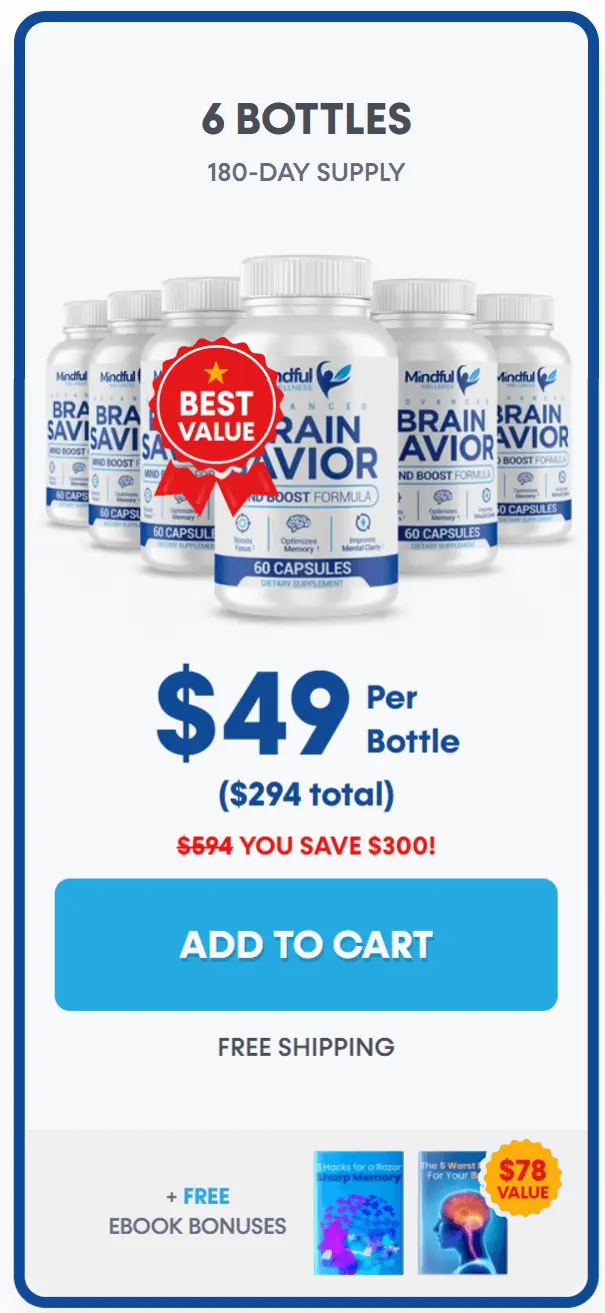
The 180-day money-back guarantee reduces the financial risk meaningfully. You're not locked in. If you try it for two months and notice nothing, you can request a refund. That's a reasonable trial window given that the primary Lion's Mane human trial ran for 16 weeks — though some users in the testimonials above reported noticing changes within weeks. You can also check out our Brain Savior results.
See current pricing and package options for Brain Savior →
Frequently Asked Questions
Ready to Try Brain Savior?
Every order includes free shipping and a 180-day money back guarantee.
Check Availability Now ➔